
Triton CCR Training in Thailand
Learn the Triton. Build real CCR skills. Progress to technical exploration.

Triton CCR training in Phuket, Thailand — from your first unit-specific course through advanced mixed-gas diving
The Triton is one of the world’s most compact and versatile closed-circuit rebreathers. Its chest-mounted configuration, low profile and mechanically controlled design make it particularly attractive to divers who want to combine CCR efficiency with the freedom to dive in challenging environments.
But learning a rebreather is about much more than learning the equipment.
At Tech Dive Asia, we focus on developing divers who can operate their Triton confidently, manage failures systematically, plan their gas and decompression correctly, and apply disciplined CCR procedures in real technical diving environments.
Whether you are buying your first Triton, crossing over from another CCR, progressing into decompression diving or working towards 100 m mixed-gas CCR diving, we can build a training pathway around your experience and goals.
Train on the Triton in Thailand with experienced CCR and technical diving instructors.
[Ask about Triton training]
Why train on the Triton with Tech Dive Asia?
A Triton course should be more than a certification
Tech Dive Asia is a team of independent technical, CCR and cave diving instructors and Instructor Trainers. Our instructors actively dive and teach across recreational CCR, decompression, mixed-gas, cave, wreck and exploration environments.
That experience matters.
We don’t approach Triton training as simply learning a new piece of equipment. We develop the skills, procedures and decision-making required to use the unit safely as your diving becomes more demanding.

What makes Tech Dive Asia different?
Experienced CCR instructors
Train with instructors who actively dive technical CCR rather than instructors who only teach occasional certification courses.
Small-team training
We keep training personal, allowing instructors to observe your skills closely and spend time on the areas that actually need development.
Unit-specific training
Your course is conducted on the Triton you intend to dive. You learn the configuration, procedures, failure management and operational skills relevant to your own equipment.
Technical-diving environment
Your training takes place in Thailand’s warm-water environment, with access to deep-water, wreck and technical diving opportunities.
A complete CCR pathway
Your Triton training doesn’t have to stop at entry-level certification. Tech Dive Asia can support progression from initial CCR training through decompression, Helitrox, mixed-gas Trimix and advanced mixed-gas CCR.
Technical and cave experience
For divers whose goals extend beyond open-water CCR diving, our team also works in technical wreck, cave and exploration environments.

Triton CCR Training Pathway
Your exact training route depends on your existing certifications, CCR experience and diving goals. Available through multiple training agencies. A typical progression can look like this:

Triton CCR Air Diluent Diver — 30 m
Begin your unit-specific Triton training.
You learn the fundamentals of operating the Triton, including:
- Triton assembly and configuration
- Pre-dive checks
- Oxygen and diluent management
- Loop volume and buoyancy control
- Basic CCR emergency procedures
- Bailout procedures
- Unit-specific failure drills
- Dive planning
- Post-dive procedures
- Maintaining safe and repeatable CCR habits
Max depth: 30 m | 5 days | From 59,600 THB | Rental Units Available | Scrubber & Gas included

Triton CCR Air Diluent Decompression — 40 m
Move from no-decompression CCR diving into controlled decompression diving.
This progression introduces:
- Decompression planning
- Stage/decompression gas management
- Advanced bailout planning
- Multiple failure scenarios
- Decompression procedures
- Team protocols
- More demanding CCR dives
Max depth: 40 m | 5 days | From 59,600 THB | Rental Units Available | Scrubber & Gas included

Triton CCR Helitrox — 45 m
For divers ready to introduce helium into their CCR diving.
Helitrox training develops the additional planning, gas-management and physiological understanding required for deeper decompression diving while reducing the effects of nitrogen narcosis.
Max depth: 45 m | 6 days | From 69,600 THB | Rental Units Available | Scrubber included
Helium has an extra cost. Check our price list for current Helium prices.

Triton Mixed Gas CCR — 60 m
Take the next step into normoxic Trimix CCR diving.
This is where CCR becomes a serious mixed-gas technical platform.
Training focuses on:
- Trimix planning
- Helium management
- Deep CCR procedures
- Advanced decompression
- Bailout strategy
- Gas switching
- Failure management
- Oxygen exposure
- Gas density
- Team communication
- Deep-water problem solving
Max depth: 60 m | 5 days | From 59,600 THB | Rental Units Available | Scrubber included
Helium has an extra cost. Check our price list for current Helium prices.

Triton Advanced Mixed Gas CCR — 100 m
For experienced CCR divers progressing toward advanced mixed-gas diving.
The TDI Advanced Mixed Gas CCR programme develops the skills required for hypoxic Trimix and deeper technical CCR diving.
Max depth: 100 m | 5 days | From 59,600 THB | Scrubber included | Helium has an extra cost.
Already qualified on another CCR?
Cross over to the Triton
If you already dive another CCR, you don’t necessarily need to start your CCR journey again.
A Triton crossover is designed to help experienced CCR divers learn the characteristics, configuration and procedures specific to the Triton.
Your training can focus on the differences that matter:
- Triton configuration
- Unit assembly and pre-dive procedures
- Oxygen management
- Bailout configuration
- Loop management
- Unit-specific emergency procedures
- Failure drills
- Trim and buoyancy
- Practical operation of the chest-mounted system
- Differences between your existing CCR and Triton procedures
CCR Crossover Course: 3 days | From 39,600 THB | Rental Units Available | Scrubber included
The exact course and certification pathway depends on your existing CCR certification, agency and experience.
Why the Triton?
A different approach to CCR diving
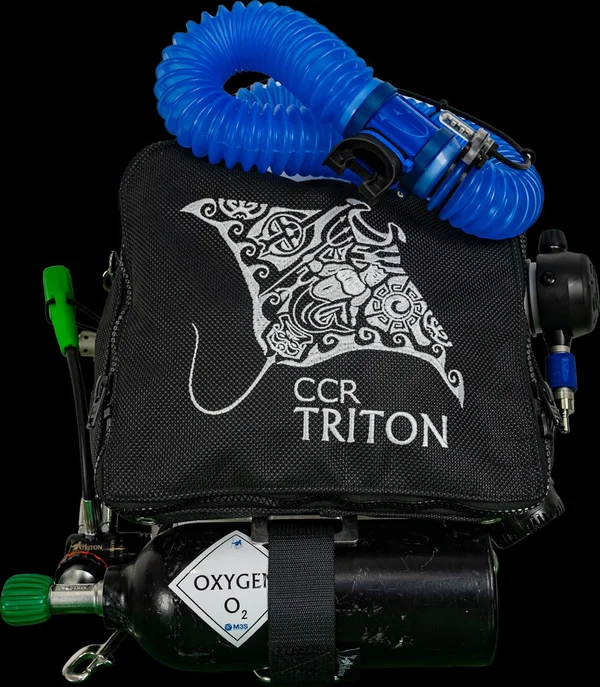
The Triton is a chest-mounted mechanically controlled closed-circuit rebreather developed by M3S in France. Its compact form factor is one of its defining characteristics.
Compact and travel-friendly
The Triton’s small chest-mounted configuration makes it attractive to divers who travel frequently or need a streamlined system for demanding environments.
Chest-mounted configuration
Moving the breathing system to the chest creates a very different feel in the water from a conventional back-mounted CCR.
Mechanically controlled CCR
The Triton uses a mechanically controlled approach that rewards disciplined manual monitoring, system awareness and good CCR procedures.
Flexible configuration
The unit can be integrated into different diving configurations, including single-cylinder, twinset and sidemount setups depending on the diver, equipment and training requirements.
Built for exploration
The compact configuration can be particularly useful in environments where equipment size and profile matter, including technical wreck and cave diving.
Triton 2.0
The latest generation of the Triton
The Triton has evolved significantly, with the current generation introducing a number of important changes to the system.
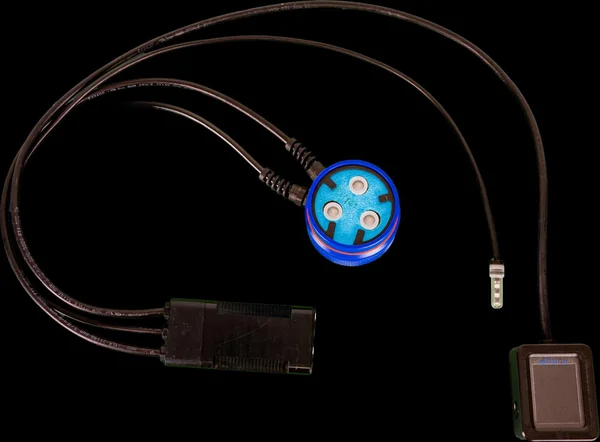
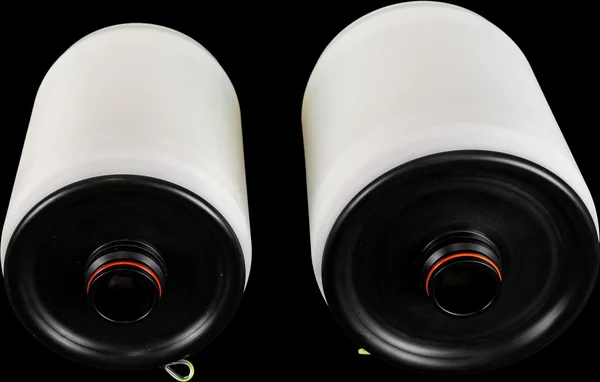
Triton 2.0 includes the new NGC controller, redesigned HUD and updated head/cell-retainer system, together with changes to the scrubber and other components.
Our instructors can help you understand the configuration and operational differences relevant to the unit you will actually use during training.
Important: Triton configuration and equipment can change over time. Training is conducted according to the current manufacturer’s configuration, applicable training-agency standards and the equipment available for your course.


What you will actually learn
Beyond the certification card
A good CCR course should leave you with more than a qualification.
Our training focuses on repeatable skills that you can continue using after the course.
CCR system management
Understand your unit rather than simply memorising procedures.
Pre-dive discipline
Develop systematic assembly, calibration, testing and pre-dive routines.
Buoyancy and loop management
Learn to manage loop volume, buoyancy and breathing in a way that becomes second nature.
Bailout planning
Understand how much bailout you need, where it should be carried and how you will use it during a real failure.
Emergency procedures
Practise appropriate responses to realistic CCR failures rather than relying on theoretical knowledge.
Decompression management
Build the planning and execution skills needed for increasingly complex decompression dives.
Gas management
Develop disciplined oxygen, diluent, bailout and decompression-gas management.
Dive planning
Plan the entire dive — not just the descent and bottom phase.
Problem solving
Learn to identify problems early, respond systematically and maintain control when something doesn’t go according to plan.
Team procedures
Develop communication and contingency procedures that work when the environment becomes demanding.

Train in Phuket, Thailand
A better environment for learning technical CCR skills
Phuket gives technical divers access to warm tropical water, deep offshore sites, wrecks and established technical-diving infrastructure.
For many divers, this makes Thailand an ideal environment to concentrate on learning a new CCR rather than fighting cold water, heavy exposure protection and difficult surface conditions.
And when training is finished, you can continue building experience through guided technical CCR diving, wreck diving, cave diving and exploration.
Tech Dive Asia also offers CCR guided diving and technical diving opportunities in Thailand.
Training. Diving. Exploration.
Build your Triton experience in the same environment in which you intend to use the skills.
Who is Triton training for?
Triton can be an excellent choice for:
Recreational divers moving into CCR
If you want longer, quieter dives and are ready to learn the discipline of rebreather diving.
Experienced CCR divers
If you want to add the Triton to your existing CCR experience.
Technical divers
If you want a compact CCR platform for decompression, wreck or exploration diving.
Cave divers
If equipment profile and manoeuvrability are important to your diving.
Travelling technical divers
If you want a CCR that is practical to transport between destinations.
Experienced explorers
If your long-term goal is advanced mixed-gas, cave, wreck or expedition diving.


What do I need before Triton training?
Requirements depend on the level of training.
For entry-level CCR training, you will normally need appropriate open-circuit diving experience and the prerequisite certification specified by the relevant training agency.
For advanced CCR training, you will need progressively greater experience on CCR, including verified CCR dives and experience at appropriate depths.
For crossover training, your existing CCR qualification and logged experience will determine the most appropriate route.
Don’t know which course you qualify for? Send us:
- Your current certifications
- Your CCR experience
- Your total CCR hours
- Your current CCR unit
- Your deepest CCR dive
- Your diving goals
- Your preferred dates
We’ll recommend the appropriate Triton pathway.
Tech Dive Asia can offer both NEW and USED Triton rebreathers for purchase either before or after your course.
CAVE CCR courses are available on the Triton
Courses Available
TDI
IANTD
Triton Courses run every month – Check available places now
Contact Us
Have questions or need help? Use the form to reach out and we will be in touch with you as quickly as possible.
Frequently Asked Questions
Is the Triton a good first rebreather?
It can be. The most appropriate first CCR depends on the diver’s goals, physical configuration, diving environment and access to ongoing training. Our instructors will discuss the advantages and limitations of the Triton before you commit to a course or purchase.
Can I cross over from another CCR?
Yes. Experienced CCR divers can undertake unit-specific Triton crossover training. The appropriate pathway depends on your existing qualification and experience.
Can I train to 100 metres on a Triton?
Advanced Mixed Gas CCR training on the Triton is available to a maximum of 100 m within the applicable training-agency certification and manufacturer limits.
100 m diving is advanced technical diving and requires significant prior CCR experience.
Do you teach TDI Triton?
Yes. Tech Dive Asia offers TDI CCR training on the Triton from Air Diluent through advanced mixed-gas levels.
Do you teach IANTD Triton?
Triton training may also be available through other recognised training pathways depending on instructor availability and the specific course. Contact us and we will advise which certification route is most appropriate.
Do I need to own a Triton?
Not necessarily. Ask us about current equipment availability when planning your course.
Where does Triton training take place?
Training is based in Phuket, Thailand, with the exact training environment selected according to the course, weather, conditions and training objectives.
Can I continue into cave or wreck diving?
Yes. Tech Dive Asia specialises in technical, CCR and cave diving, allowing experienced divers to continue progressing after their initial Triton qualification.
Ready to start your Triton journey?
Tell us where you are now — we’ll help you plan the next step.
You don’t need to know which Triton course you need before contacting us.
Send us your current certification, CCR experience and diving goals.
We’ll help you identify:
→ the right Triton course
→ the appropriate certification pathway
→ the experience you need before progressing
→ the equipment and logistics required
→ the best training dates in Phuket