
Explore beyond recreational limits with professional TDI overhead diving training in Thailand. Learn the skills, procedures, and mindset required for safe cave, mine, and advanced wreck penetration diving.
Overhead Diving Thailand | Cave, Mine & Wreck Diving Training | TDI Tech Dive Asia
Overhead diving
Overhead diving is one of the most advanced and rewarding forms of scuba diving. Unlike open water diving, overhead environments prevent a diver from making a direct ascent to the surface. Whether exploring flooded caves, abandoned mines, or penetrating historic shipwrecks, overhead diving requires specialised training, disciplined procedures, and advanced technical diving skills.
At Tech Dive Asia, we provide professional overhead diving training in Thailand through internationally recognised Training agencies, TDI,IANTD, RAID, PADI & SSI. Our courses are designed for divers who want to safely expand beyond recreational limits and explore environments few divers ever experience.
From crystal-clear cave systems and submerged mines to deep wreck penetration training, our overhead diving programs combine modern technical diving standards, real-world exploration experience, and practical safety-focused instruction.
- Overhead cave course in Thailand
- Overhead mine course in Thailand
- Overhead wreck course in Thailand


What is Overhead Diving?
Overhead diving refers to any type of dive where the diver cannot make an immediate vertical ascent to the surface due to a physical barrier overhead. These environments demand advanced situational awareness, precise buoyancy control, redundant life support systems, and strict gas management procedures.
Common forms of overhead diving include:
- Cave diving
- Cavern diving
- Mine diving
- Wreck penetration diving
- Ice diving
- Tunnel and infrastructure exploration
Because visibility can rapidly deteriorate and exits may be far from the diver’s position, overhead diving relies heavily on continuous guideline use, team communication, equipment redundancy, and emergency planning.
Technical divers entering overhead environments must develop:
- Advanced propulsion techniques
- Precision trim and buoyancy control
- Situational awareness under stress
- Guideline navigation skills
- Emergency gas-sharing procedures
- Lost line and lost diver protocols
- Failure management and redundancy planning
Overhead environments are unforgiving of mistakes, which is why structured training and progressive experience are essential.
Why Train with Tech Dive Asia?
Tech Dive Asia is one of Southeast Asia’s leading technical diving training facilities for overhead environment diving. Our programs are built around internationally recognised TDI standards combined with real exploration experience in caves, mines, and wrecks throughout Thailand and the region.
What Makes Our Training Different?
Real Exploration Experience
Our instructors actively participate in cave and mine exploration projects across Thailand and Southeast Asia. This means students learn practical skills based on real expedition diving rather than only classroom theory.
Small Team Training
We maintain low student-to-instructor ratios to ensure every diver receives detailed coaching and individual feedback.
Progressive Skill Development
Our courses focus on building solid technical diving foundations before progressing to more advanced penetration and navigation techniques.
Multi-Agency Technical Training
We offer overhead environment courses through:
TDI | IANTD | RAID | SSI XR | PADI TecRec
Thailand-Based Overhead Diving Access
Thailand offers unique opportunities for overhead environment training, including flooded mines, deep wrecks, caverns, and expedition-style exploration projects.
Cave Diving in Thailand
Cave Diving in Thailand and Southeast Asia
Cave diving is considered by many technical divers to be the pinnacle of underwater exploration. Cave systems offer extraordinary visibility, geological formations, silence, and environments untouched by most divers.
Cave diving requires divers to navigate complex passages while maintaining continuous guideline contact and strict gas management protocols.
At Tech Dive Asia, our cave diving programs are designed to progressively develop the skills necessary for safe cave penetration.
Our Cave Diving Courses
Cavern Diver
The cavern course introduces divers to overhead environments while remaining within the daylight zone of a cave system. Divers learn:
- Cavern navigation
- Guideline procedures
- Basic emergency protocols
- Gas management fundamentals
- Buoyancy and trim refinement
- Team communication techniques
👉 Find out more about the TDI Cavern Diver Course in Thailand
Intro to Cave Diver
This course develops the core skills required for cave penetration diving beyond the cavern zone. Training includes:
- Primary guideline use
- Jump and gap procedures
- Emergency drills
- Lost line recovery
- Advanced propulsion techniques
- Situational awareness under overhead conditions
👉 Find out more about the TDI Intro to Cave Course in Thailand
Full Cave Diver
The Full Cave Diver program expands a diver’s ability to safely explore more complex cave systems. Divers learn:
- Complex navigation techniques
- Multi-stage penetration planning
- Advanced gas planning
- Circuit and traverse procedures
- Exploration protocols
- Team-based cave procedures
- Advanced Cave Programs
👉 Find out more about the TDI Full Cave Diver Course in Thailand
Advanced Cave Programs
Additional cave training options may include:
- Sidemount Cave Diver
- DPV Cave Diver
- Stage Cave Diver
- CCR Cave Diver
- Cave Survey Procedures
- Exploration and Expedition Planning
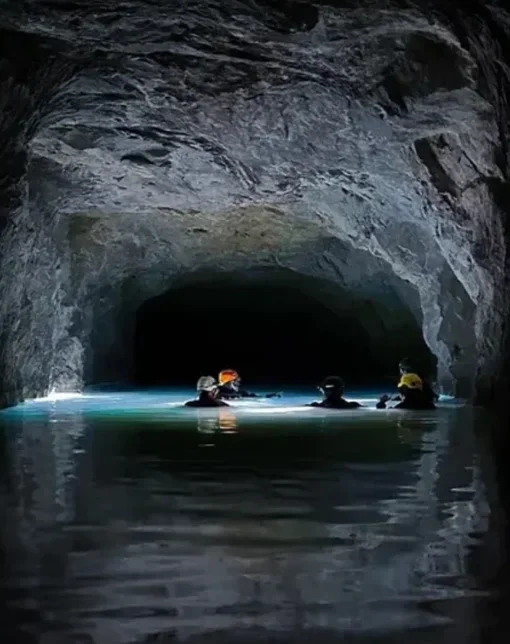
Mine Diving in Thailand
Mine Diving in Thailand and South East Asia
Mine diving is one of the most unique forms of overhead exploration diving. Flooded mines combine elements of cave diving, wreck penetration, archaeology, and expedition diving.
Thailand has a long history of mineral extraction, including tin, lead, zinc, and gold mining. Many abandoned mine systems throughout the country have gradually flooded, creating extraordinary underwater environments for exploration.
Unlike natural cave systems, flooded mines often contain:
- Rails and tracks
- Industrial machinery
- Vertical shafts
- Tunnels and chambers
- Historical mining structures
- Low-visibility sections
- Complex navigation routes
These environments demand exceptional line discipline, advanced navigation skills, and highly refined technical diving procedures.
Mine Diving Training
Our mine diving programs are designed for qualified overhead divers looking to expand their experience into flooded industrial environments.
Training may include:
- Mine navigation procedures
- Exploration protocols
- Silt management
- Vertical ascent and descent techniques
- Safety reel deployment
- Complex guideline systems
- Mine-specific emergency scenarios
Our team has been involved in some of Thailand’s pioneering flooded mine exploration projects, helping map and document underwater mine systems rarely visited by divers.
👉 Find out more about the Mine Diving Courses available in Thailand
Advanced Wreck Diving

Wreck Diving Beyond Recreational Limits
Advanced wreck diving allows divers to move beyond exterior exploration and safely penetrate inside sunken ships and artificial structures.
Wreck penetration diving combines technical diving procedures with historical exploration. Divers may encounter narrow corridors, collapsed sections, entanglement hazards, unstable structures, and limited visibility.
Proper training is essential before entering enclosed wreck environments.
TDI Advanced Wreck Diver Training
Our advanced wreck diving courses teach divers how to safely plan and execute wreck penetration dives using proper overhead environment procedures. Topics include:
- Wreck penetration techniques
- Guideline deployment
- Hazard identification
- Silt management
- Redundant gas systems
- Emergency exit procedures
- Team positioning
- Equipment configuration
Students also develop the propulsion and buoyancy skills necessary to avoid disturbing sediment inside enclosed wreck spaces.
Wreck Diving Opportunities in Thailand
Thailand and Southeast Asia offer numerous wreck diving opportunities ranging from recreational wrecks to deep technical penetration projects. Training dives may include:
- Cargo wrecks
- War wrecks
- Artificial reefs
- Deep offshore wrecks
- Technical decompression wreck dives
👉 Find out more about the Advanced Wreck Diver Courses in Thailand
Overhead Diving Equipment
Proper equipment configuration is critical in overhead environments. Technical divers require redundant life-support systems and streamlined equipment setups designed for confined environments. Typical overhead diving equipment may include:
- Twinset or sidemount systems
- Redundant regulators
- Primary and backup lights
- Reels and spools
- Guideline markers
- Technical exposure protection
- Stage cylinders
- Redundant buoyancy systems
- Cutting devices
- Dive computers with decompression capability
Equipment configuration is integrated into all Tech Dive Asia training programs.
Safety in Overhead Diving
Safety is the foundation of all overhead environment training.
At Tech Dive Asia, we emphasise a disciplined, procedural approach to technical diving built around risk management and team awareness. Key safety principles include:
- Continuous Guideline Use – Divers maintain a continuous guideline to open water or the exit point throughout the dive.
- Gas Management – Technical gas planning procedures help ensure adequate reserves for exit scenarios and emergencies.
- Redundancy – Critical life-support systems must have backups in case of failure.
- Team Diving Procedures – Divers operate within structured team protocols using communication, positioning, and emergency procedures.
- Situational Awareness – Overhead divers must continuously monitor depth, gas consumption, navigation, visibility, and teammate status.
Our programs are designed to build confidence through repetition, realistic scenarios, and progressive skill development.
Who Can Learn Overhead Diving?
Overhead environment training is suitable for experienced recreational divers who want to progress into technical diving.
Prerequisites vary depending on the course level, but students should generally have:
- Strong buoyancy control
- Good situational awareness
- Comfortable diving experience
- Interest in technical diving procedures
- Commitment to disciplined training
Many divers begin with:
From there, divers can progress into cavern, cave, wreck, or mine diving
Contact Us
Have questions or need help? Use the form to reach out and we will be in touch with you as quickly as possible.